
Line & Wash
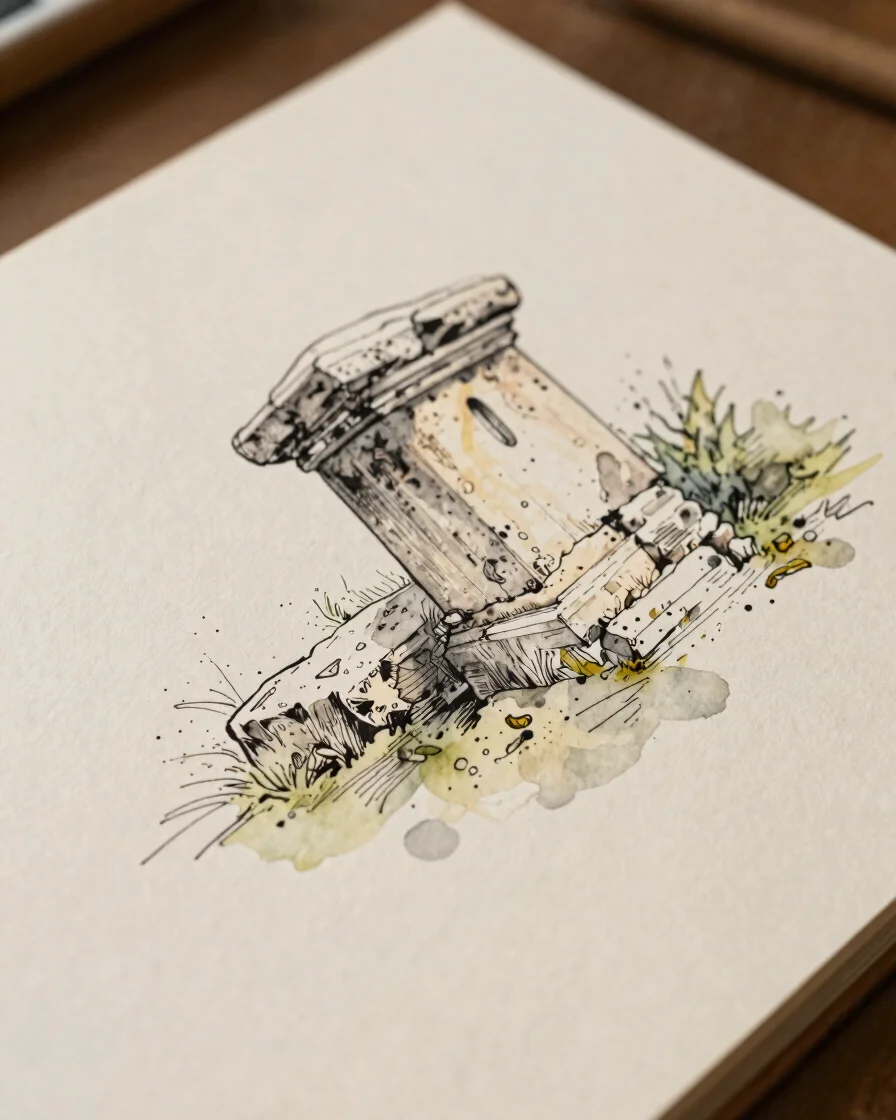
Ink line meets transparent watercolour
Waterproof pen gives structure, and translucent pigment gives light. Together they build drawings that feel both precise and alive.
The method
Line first, then wash
Begin with a waterproof ink line to establish architecture, stone edges, and botanical structure. Let the line settle before you touch it with water, so it remains crisp under the paint.
From there, move between wet-on-dry washes for controlled shapes and wet-in-wet glazes for soft morning light. Each layer should be allowed to dry before you decide what it needs next.
Materials
Choosing your tools
01
Waterproof pens
Choose a fine waterproof nib for clean, permanent line work that will not lift when watercolour is applied over it.
02
Lightfast pigments
Select transparent watercolours with strong lightfastness ratings to keep glazes luminous over time, and build a small, considered palette.
03
300gsm cotton paper
Use heavy, archival cotton paper that holds multiple washes without buckling, so each layer stays clear and the surface remains sound.